For years, veganism had a branding problem.
It was worthy. It was earnest. It had lentils. It had documentaries with ominous piano music and Instagram captions that began, “Did you know that the average person consumes…” It arrived in hemp trousers, carried its own cutlery and seemed faintly disappointed in you for ordering the truffle fries.
Then something happened.
Veganism got hot.
Not simply healthy, not simply ethical, not simply environmentally conscious. Hot. The kind of hot that has nothing to do with calorie counts and everything to do with charisma, clothes, sex appeal, confidence and the increasingly seductive idea that caring about animals does not require looking like you have recently emerged from a compost bin.
Call it the re-cuntification of veganism.
The phrase is deliberately outlandish because the transformation is cultural rather than nutritional. Veganism has moved from the realm of self-denial into the realm of self-expression. It is no longer necessarily about what you are refusing. It is about the person you become when your values, aesthetics and ambitions start pointing in the same direction.
And suddenly, the people making veganism look desirable are not just wellness influencers. They are Oscar winners, Formula One champions, Grammy-winning musicians, fashion provocateurs, actors, models and artists with the kind of wardrobes that make morality look dangerously good.
Take Lewis Hamilton. If there were ever a person capable of demolishing the old stereotype that veganism is incompatible with glamour, speed and unapologetic excess, it is Hamilton. Seven-time Formula One World Champion, global fashion fixture, Met Gala regular and perennial member of the world’s most photographed sporting elite, Hamilton has made plant-based living part of an identity that is anything but ascetic. He went vegan in 2017 and has spoken publicly about animal cruelty, climate change and health. PETA named him its Person of the Year in 2018.
The point is not that Hamilton is vegan despite being cool.
The point is that, in his world, veganism is part of the cool.
That distinction matters.
Because veganism has spent decades trying to convince people that compassion is attractive. The new generation has figured out something much more powerful: make the compassionate person attractive.
Enter Billie Eilish, perhaps the clearest example of veganism’s transformation from lifestyle choice into pop-cultural language. Eilish has been vegan since her early teens and has built animal advocacy into her wider creative universe. She has won multiple Grammys and an Academy Award, become one of the defining musicians of her generation and repeatedly used enormous cultural platforms to talk about animal rights and climate. PETA named her its 2021 Person of the Year, and her influence has extended into fashion and product design, including a vegan Air Jordan collaboration.
Eilish is particularly important because she does not present veganism as immaculate.
She presents it as culture.
There are clothes. There is music. There is beauty. There is attitude. There is the slightly bratty confidence of somebody who knows exactly what she thinks and has absolutely no interest in making that opinion palatable.
That is the re-cuntification in action.
Then there is Cynthia Erivo, whose relationship with veganism fits naturally into a career built on extraordinary physicality, theatricality and visual drama. Erivo is an Olivier Award-winning stage performer, a Grammy winner, an Emmy winner and an Oscar-nominated actor, with a career spanning Broadway, film, television and music. She has been vegan for more than a decade, according to Viva!.
And Erivo has precisely the quality vegan culture once seemed to lack: spectacle.
Her red-carpet appearances are not minimalist. Her performances are not minimalist. Her voice is not minimalist. Her presence is not minimalist. She demonstrates that an ethical lifestyle does not have to be visually quiet. You can care about animals and still want the giant gown, the immaculate manicure, the architectural silhouette, the dramatic entrance.
In other words, you can have principles and still serve.
Joaquin Phoenix represents a different, darker strain of vegan cool. Vegan since childhood, Phoenix has spent decades turning animal advocacy into an extension of his artistic persona rather than a marketing accessory. His career includes an Academy Award for Joker, but his activism is equally central to his public identity. He has narrated animal-rights documentaries, campaigned with animal-protection organisations and was named PETA’s Person of the Year in 2019.
Phoenix is important because he makes veganism look intellectually serious without making it look respectable in the boring sense.
There is nothing beige about him.
If Hamilton gives veganism velocity and Eilish gives it youth culture, Phoenix gives it menace. He suggests that compassion can be confrontational, that ethical choices can contain rage, and that refusing to participate in animal exploitation can be an act of rebellion rather than a wellness preference.
His partner, Rooney Mara, brings another dimension entirely: fashion.
Mara has long occupied that rare space between Hollywood celebrity and fashion-world outsider, with a style that feels severe, intelligent and deliberately removed from conventional celebrity glamour. An Oscar-nominated actor, she has also built a vegan fashion identity through Hiraeth Collective, a brand created around avoiding materials including leather, silk, fur and wool. She has investigated factory farming and participated in animal-rights documentaries, including Dominion.
Mara understands something the fashion industry is only gradually confronting: veganism is not simply about food.
It is about materials, desire and status.
For decades, luxury was defined through animal products. Leather meant wealth. Fur meant power. Silk meant refinement. The great irony of the modern vegan aesthetic is that it is beginning to dismantle those assumptions while simultaneously becoming more luxurious, more sophisticated and more visually compelling.
Then there is Natalie Portman, who brings intellectual glamour to the movement. Harvard educated, Oscar-winning and one of Hollywood’s most recognisable actors, Portman became vegan in 2011 after previously being vegetarian. She has connected animal rights with broader questions around exploitation and has worked with Support + Feed, the vegan organisation founded by her mother.
Portman makes the argument that veganism can be cerebral.
Mara makes it fashionable.
Phoenix makes it radical.
Eilish makes it pop.
Hamilton makes it athletic.
Erivo makes it theatrical.
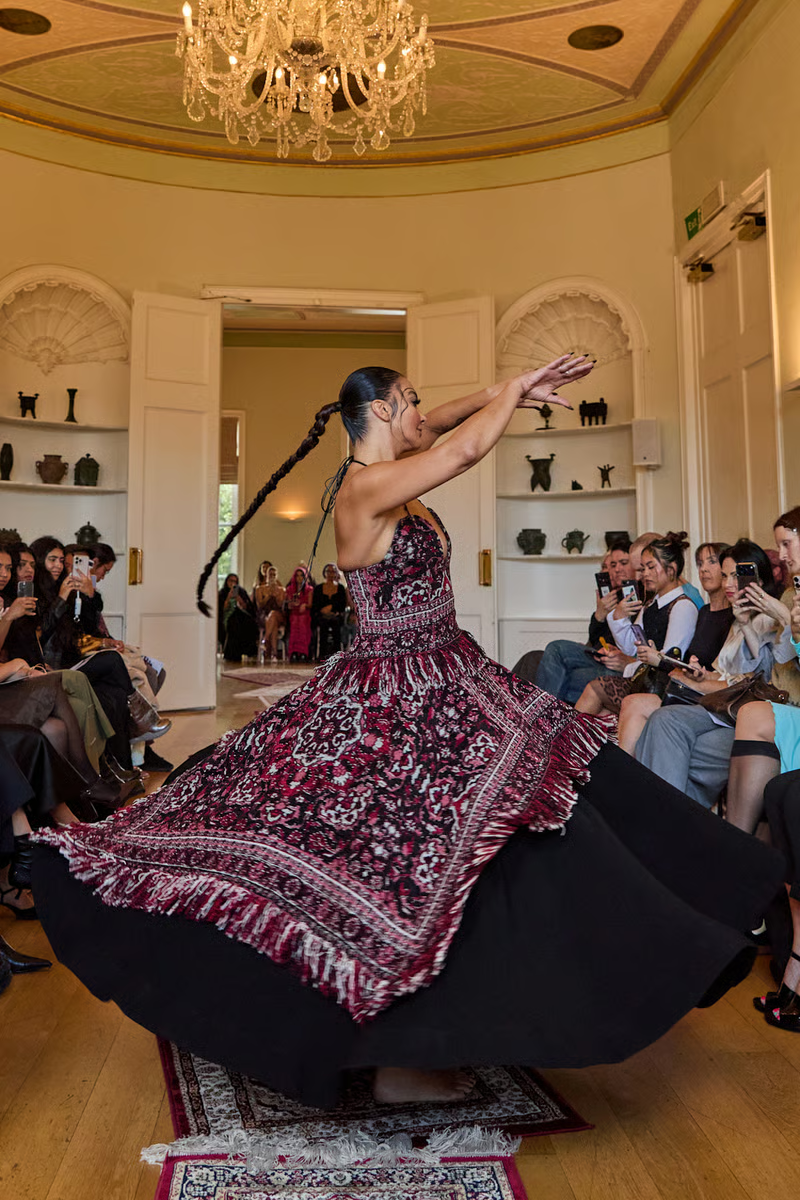
And then there are the people who occupy the more experimental edges of the culture, including recording artist and spiritual baddie, NEO 10Y, and award-winning fashion designer, Sarah Regensburger, names that feel particularly relevant to this newer, less apologetic version of veganism.
With NEO 10Y, the appeal is less about the traditional celebrity endorsement model and more about the energy of an emerging creative culture in which vegan identity can exist alongside futurism, fashion and a deliberately constructed sense of cool. The attraction is precisely that it does not feel like conventional vegan advocacy. It feels like culture first, ideology second.
Regensburger occupies a similarly interesting space. Her appeal sits in that increasingly important intersection between personal aesthetics and conscious living, where veganism does not need to announce itself with a giant green leaf. It can be embedded in the clothes, the attitude, the image and the choices.
This is perhaps the most important change of all.
The old vegan celebrity was expected to explain veganism.
The new vegan celebrity simply looks like themselves.
That difference is enormous.

It is why veganism now feels increasingly at home in fashion, music and contemporary celebrity culture. The movement has stopped asking, “How can we persuade you to give something up?” and started asking, “What kind of world do you want to inhabit?”
Consider Moby, vegan since the 1980s, whose relationship with animal rights has stretched across decades of music and activism. His Little Pine restaurant in Los Angeles became a physical expression of the idea that vegan food could be sophisticated rather than merely substitutive. He has also donated proceeds from creative work to animal-rights organisations.
Or Woody Harrelson, who has been vegan for decades and has managed to make environmentalism feel less like a corporate sustainability seminar and more like a permanent state of eccentric Hollywood cool. He belongs to an older generation of vegan celebrity, but his longevity is important. The lifestyle did not begin with Instagram.
Then there is Jessica Chastain, an Academy Award-winning actor whose veganism has become part of a broader interest in animal welfare and cruelty-free living. Alicia Silverstone, meanwhile, helped establish the earlier wellness era through The Kind Diet, demonstrating that veganism could be connected to beauty, health and lifestyle long before the current aesthetic revolution.
And Evanna Lynch, forever associated with Luna Lovegood but now also known for vegan advocacy and her podcast work, represents another crucial development: veganism is no longer a single personality type. It can be mystical, intellectual, glamorous, punk, sporty, theatrical, political or completely weird.
That plurality is the point.
The re-cuntification of veganism is not about turning every vegan into a model or pretending that animal ethics are a fashion accessory. Quite the opposite. It is about removing the assumption that ethical seriousness requires aesthetic seriousness.
The new vegan does not necessarily want to look morally superior.
They want to look fucking incredible.
They want the good outfit. The great body. The insane career. The beautiful dinner. The festival wristband. The couture. The album. The film. The championship. The stage. The magazine cover.
And then, perhaps, they want to order the plant-based option.
This is where veganism becomes culturally dangerous in the best possible sense. It stops presenting itself as deprivation and starts presenting itself as possibility.
The question is no longer whether veganism can be sexy.
Clearly, it can.
The more interesting question is whether the culture is finally ready to understand that sexy and compassionate were never opposites in the first place.