
US President Donald Trump has announced that the American government will begin referring to artificial intelligence as “Super Intelligence”, arguing that the new name better reflects the power and potential of the technology.
Trump made the announcement on September 22, 2026, during his address to the United Nations General Assembly in New York. He said US government documents would use “Super Intelligence”, or “SI”, instead of “Artificial Intelligence”, and expressed hope that other countries would eventually adopt the terminology.
Trump’s argument is based partly on the meaning of the word “artificial”. He said the term can make intelligence sound “fake”, whereas modern AI systems can perform increasingly sophisticated tasks involving language, reasoning, images, coding and decision-making. Trump described the technology as “amazing” while also saying that it must be handled carefully.
The announcement followed a social-media poll Trump launched several days earlier, in which he asked followers to consider alternative names including “Superior Intelligence”, “Extreme Intelligence” and “Supreme Intelligence”. He had argued that “Artificial Intelligence” was inaccurate and inelegant.
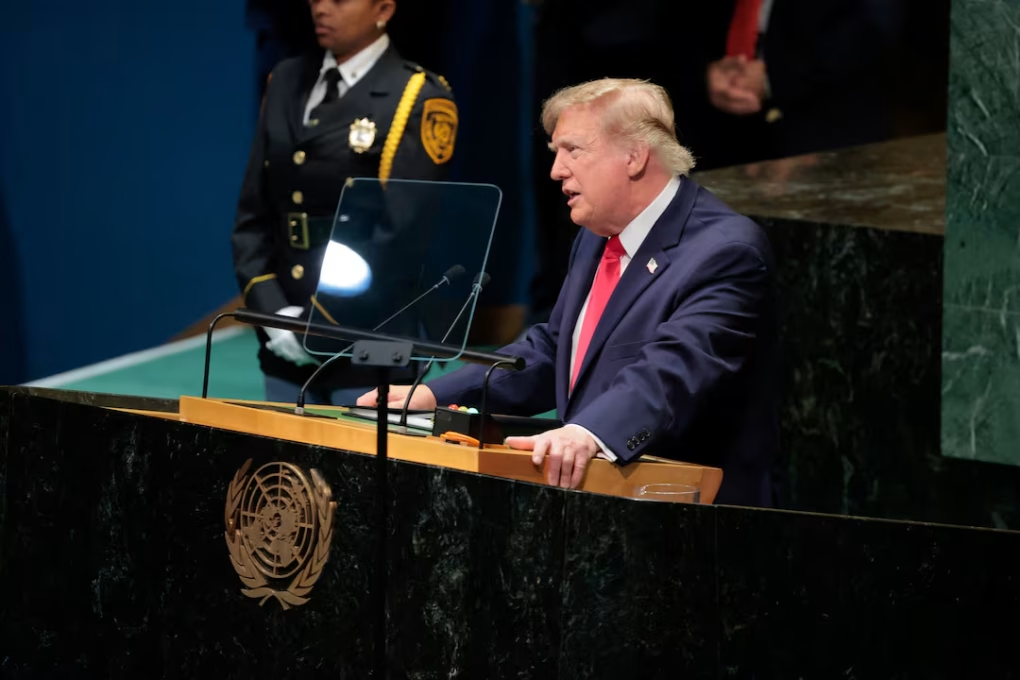
The terminology change is part of a wider debate over America’s approach to advanced AI. Trump has repeatedly argued that the United States should maintain its technological lead, particularly in competition with China. He has also rejected calls for broad international regulation, warning that excessive restrictions could slow American innovation. At the UN, he said he would not “stifle” the growth of a technology he believes could become more significant than the Industrial Revolution.
However, “superintelligence” already has a specific meaning within technology and academic discussions. It generally describes a hypothetical AI system whose intellectual abilities would surpass those of humans across many areas. That is different from the broader term “artificial intelligence”, which covers today’s existing technologies as well as future systems.
Trump’s announcement therefore represents more than a change in wording. It reflects a broader political and technological debate about how society should understand increasingly powerful AI, how quickly it should be developed, and what safeguards should accompany it. While Trump emphasizes American leadership and technological growth, researchers and technology leaders continue to debate the potential risks and appropriate levels of regulation.
The proposed terminology may attract attention internationally, but whether “Super Intelligence” becomes a widely accepted replacement for “Artificial Intelligence” remains to be seen.