For the LGBT community, the deaths of Dolly Parton and Tim Curry within roughly twelve hours of one another feel almost unbearably cruel. Two very different performers, from very different worlds, somehow occupied a similar place in queer history: they gave generations of LGBT people permission to be themselves, to be flamboyant, complicated, emotional and unapologetically different.
Dolly Parton died on August 25, 2026, aged 80, following a brief battle with cancer. Tim Curry died later that night, also aged 80, at his home in Los Angeles. The coincidence has left many queer fans mourning not simply two celebrities, but two figures who helped shape the cultural landscape in which LGBT people learned to see themselves.
For many gay men, Dolly was an unlikely but profoundly important icon. She represented glamour without pretension, femininity without weakness and success without abandoning her roots. Her rhinestones, humour and unapologetic larger-than-life personality made her a natural camp icon, but her importance went far beyond camp. She consistently welcomed LGBT people, supported marriage equality and spoke openly about accepting transgender people. Her song “Travelin’ Thru,” written for Transamerica, directly addressed a transgender character’s journey, while her broader message was one of compassion and acceptance.

That mattered because Dolly reached people who might never have encountered an explicitly LGBT cultural figure. She could stand on a country stage, beloved by conservative America, while simultaneously making queer people feel that there was a place for them in the story of the American South. The Los Angeles LGBT Center described her as a reminder that LGBT people deserved to be celebrated exactly as they were.
Tim Curry’s influence was more overtly rebellious. As Dr. Frank-N-Furter in The Rocky Horror Picture Show, he exploded onto screens in 1975 as a sexually liberated, gender-bending character who refused conventional ideas of masculinity. Curry’s performance became central to one of the most enduring queer cult phenomena in popular culture. Midnight screenings became spaces where people could dress up, experiment with gender expression and find community.
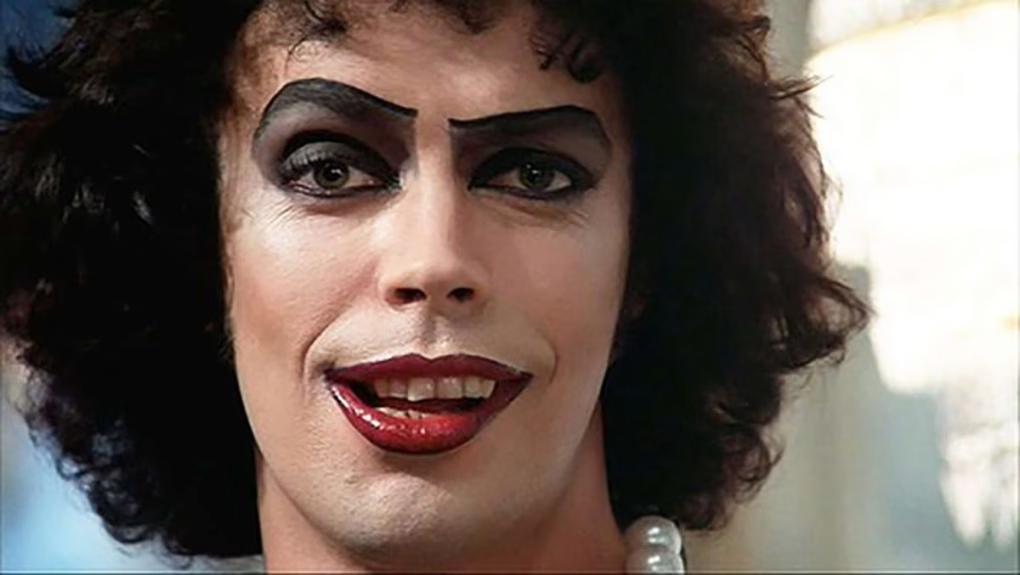
Together, Parton and Curry represented two sides of queer cultural history. Dolly showed that acceptance could come wrapped in rhinestones, warmth and country charm. Curry showed that liberation could be loud, theatrical, sexual and outrageous.
Their deaths arriving almost simultaneously have therefore created a peculiar kind of collective grief. For LGBT people who grew up with them, mourning Dolly and Tim is also mourning pieces of a cultural history that taught millions that being different was not something to hide. Their legacies remind us that sometimes the people who change queer history are not necessarily queer themselves. Sometimes they are the artists who make us feel less alone.