The announcement that CERN‘s Large Hadron Collider will remain offline until around 2030 for its major High Luminosity upgrade has reignited one of the internet’s most enduring conspiracy theories: what if every time the world’s largest particle accelerator powers up, reality itself changes? While there is no scientific evidence that CERN alters timelines or shifts humanity into parallel dimensions, the idea has become a modern myth, fuelled by the so-called Mandela Effect, strange feelings of collective déjà vu, and a growing fascination with the nature of consciousness and time.
Supporters of the theory argue that if CERN is probing the fundamental building blocks of reality, perhaps it is doing more than observing particles. They speculate that collisions at unimaginable energies could somehow disturb the fabric of space-time, creating subtle changes that ripple across our reality. Scientists reject this notion, explaining that the energies produced are tiny compared with those generated naturally by cosmic rays striking Earth’s atmosphere every day. Yet the mystery persists because humans instinctively search for meaning when the world feels increasingly surreal.
Interestingly, the collider’s extended silence arrives as astrologers point to an unusually symbolic cosmic backdrop. Jupiter’s journey through Leo is associated with amplified creativity, courage, leadership and collective self-expression. Rather than looking outward for answers, this transit encourages people to rediscover their own inner light. At the same time, a Full Moon traditionally represents culmination and revelation, illuminating truths that have been hidden beneath the surface. Add Mercury retrograde into the mix, a period often linked with reflection, revisiting the past, communication mishaps and questioning accepted narratives, and it becomes easy to understand why so many feel as though reality itself is being rewritten.
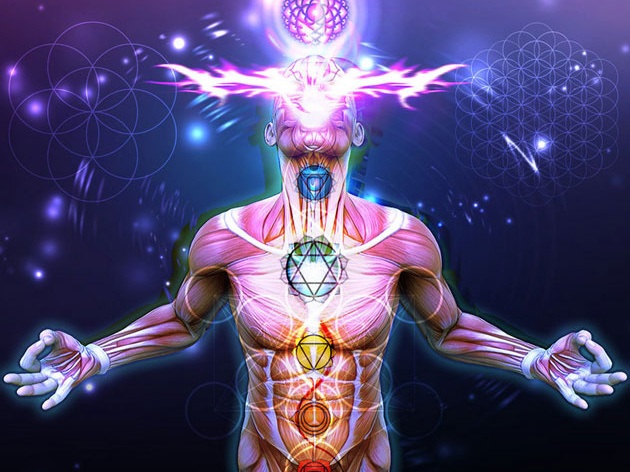
Whether viewed through science or symbolism, the overlap is compelling. CERN pauses its exploration of matter while millions turn inward, questioning memory, identity and the nature of existence. One journey looks into the atom. The other looks into consciousness.
Perhaps the real timeline shift has nothing to do with particle physics. Maybe it is happening within society itself. Artificial intelligence is reshaping work, institutions are being questioned, old belief systems are dissolving, and technology is transforming our relationship with truth faster than ever before. In that context, the feeling that “something has changed” may be less about parallel universes and more about humanity standing at the threshold of a new era.
The most fascinating possibility is also the simplest. Time may not be changing at all. We are. And when perception evolves, the universe can appear to evolve with it. Whether you believe in physics, astrology, both or neither, one thing is undeniable: we are living through a period where the boundaries between certainty and possibility have never felt thinner.