On Saturday 28 March 2026, central London witnessed one of the largest political demonstrations in recent British history, with organisers claiming that up to 500,000 people took part in a mass march against the rise of far-right politics. Police estimates were significantly lower, suggesting closer to 50,000 attendees, but there is broad agreement that the protest was both large and symbolically significant.
The march, organised by the Together Alliance, brought together a wide coalition of more than 100 groups, including trade unions, anti-racism organisations, climate activists, religious groups, and civil society campaigns. Participants marched from Park Lane through Whitehall to Trafalgar Square, carrying banners with messages such as “Refugees welcome” and “No to racism.”
At its core, the protest was aimed at opposing the growing influence of far-right movements and political figures in the UK, particularly the rise of Reform UK and wider anti-immigration rhetoric. Demonstrators expressed concern about increasing racism, Islamophobia, and nationalist politics, as well as broader issues such as climate justice and international conflicts.
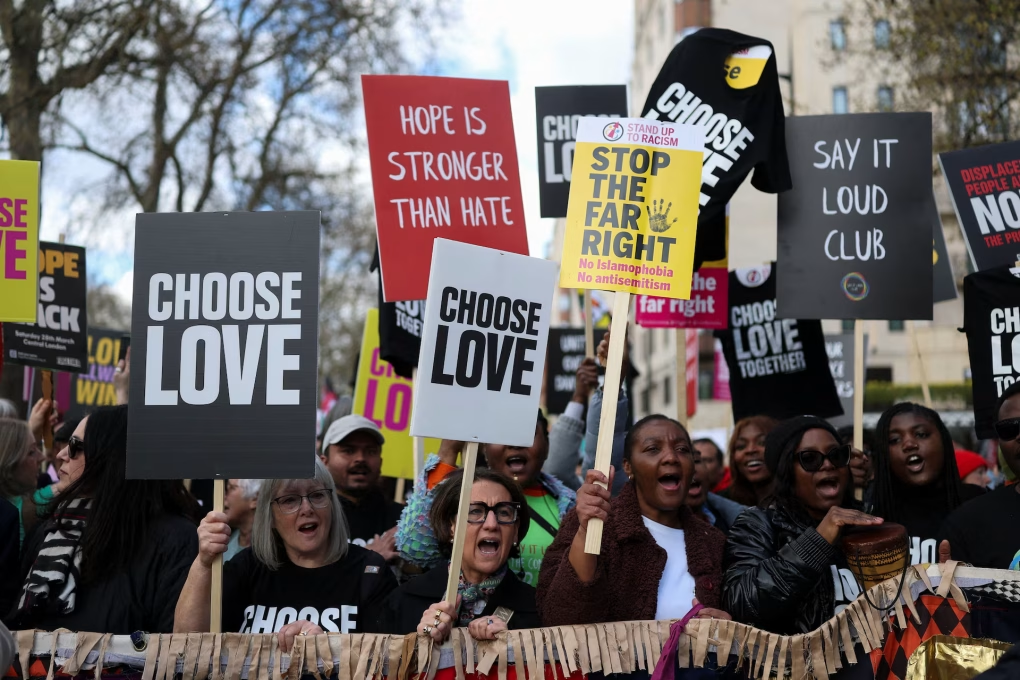
The event drew a diverse range of attendees. Politicians such as Green Party figures and Labour MPs addressed the crowd, while high-profile cultural figures, including actors, comedians, and musicians, showed support. Performers and speakers helped create a festival-like atmosphere, reflecting what organisers described as a “multicultural” show of unity.
Key partners and supporters included trade unions, environmental movements like Extinction Rebellion, and numerous grassroots organisations. In total, hundreds of groups contributed to organising and mobilising the march, making it one of the broadest coalitions seen in recent UK protest movements.

Despite its scale, the march was not without controversy. Critics questioned the accuracy of attendance figures and raised concerns about the political messaging, arguing it was heavily aligned with left-wing causes. The presence of pro-Palestinian symbols and anti-government slogans added further tension, especially given ongoing international conflicts.
There were also security concerns. Police reported around 25 arrests, including incidents linked to separate demonstrations supporting banned groups. A small number of counter-protesters were present, highlighting the polarised political climate surrounding the event.
Ultimately, the march underscored deep divisions in British society. For supporters, it was a powerful statement of solidarity against hate and extremism. For critics, it raised questions about political bias, public order, and the increasingly charged nature of protest movements in the UK.