Guillermo del Toro’s Frankenstein stands as the most emotionally profound and visually breathtaking adaptation of Mary Shelley’s masterpiece ever created. While countless filmmakers have attempted to capture the soul of Shelley’s story, none have done so with the same compassion, artistry, and sheer cinematic beauty that del Toro brings to the screen.
At the heart of the film lies a deep empathy for the Creature. Rather than depicting him as a lumbering monster, del Toro allows us to see the world through his eyes — to feel his confusion, loneliness, and longing for connection. Jacob Elordi’s portrayal of the Creature is hauntingly beautiful. His performance balances physical power with childlike vulnerability, making the audience not just pity him but truly understand him. Through Elordi’s subtle expressions and physical grace, the Creature becomes a mirror for humanity’s own isolation and desire to be loved.
Oscar Isaac delivers an equally compelling performance as Victor Frankenstein. His Victor is not a caricature of scientific arrogance, but a deeply flawed and tormented man consumed by ambition and guilt. Isaac captures both the brilliance and the moral decay of a creator who cannot face his creation. Opposite him, Mia Goth brings quiet intensity and aching tenderness to her role. She is the emotional compass of the story, grounding the tragedy in moments of pure human connection. Together, these performances form the emotional core of the film — a tragic symphony of creation, abandonment, and yearning.

Visually, Frankenstein is a revelation. Every frame looks as though it has been painted with obsessive care. The cinematography glows with vibrant energy — so crisp and detailed that it feels like it was shot in 8K. Textures leap off the screen: the gleam of laboratory glass, the wet glisten of rain-soaked cobblestones, the pale shimmer of skin stitched together. The lighting shifts from cold, moonlit blues to fiery golds and blood-red shadows, making each scene pulse with emotion. The attention to detail is staggering; you can almost feel the air — heavy with fog, electricity, and longing.
Del Toro’s world feels alive in a way few films ever do. The camera moves fluidly, following the Creature through vast, decaying landscapes and candlelit chambers. The design is pure gothic beauty — ornate, tactile, and rich with symbolism. Every prop, every wall, every flicker of light serves a purpose. The film vibrates with life, with color, with movement; it’s as though the screen itself is breathing.
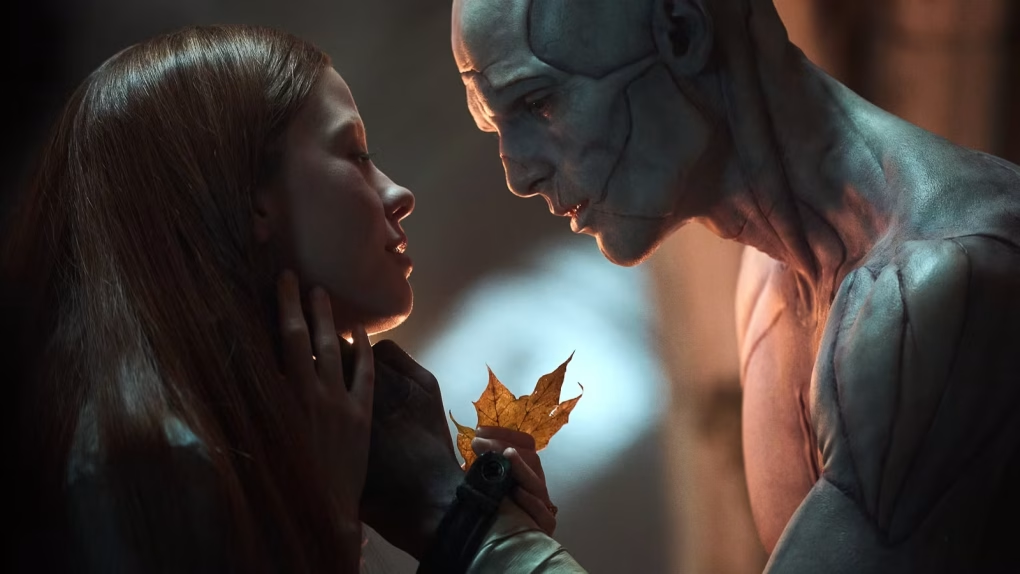
Yet beyond its technical brilliance, what truly elevates Frankenstein is its heart. Del Toro doesn’t just retell Shelley’s story — he resurrects it with compassion. He reminds us that the Creature is not born evil but shaped by rejection and pain. The film asks the eternal questions: Who is the real monster? What do we owe to the lives we create? What does it mean to be human? The answers aren’t simple, and that’s precisely why this version lingers long after the credits roll.
Guillermo del Toro’s Frankenstein is a masterpiece — a film that fuses the emotional depth of a tragedy with the visual majesty of a dream. It is at once intimate and epic, tender and terrifying. Every element — the performances, the cinematography, the color, the texture — works in perfect harmony to create something rare: a film that feels both timeless and utterly alive. It’s not just the best Frankenstein ever made; it’s one of the most beautiful expressions of empathy ever captured on film.
You can stream it now on Netflix.