Cosmic irrelevance sounds bleak at first glance. It suggests smallness, insignificance, even futility. In a culture that urges us to optimize every decision and treat every moment as decisive, the idea that we barely register on the universal scale can feel unsettling.
Yet when we examine the numbers, something surprising happens. Instead of despair, we may find relief.
The observable universe stretches roughly 93 billion light years across. It contains an estimated 200 billion trillion stars, a number so large it is easier to write as 2 followed by 23 zeros. Many of those stars host planets. In our own galaxy, the Milky Way, astronomers estimate there may be 100 to 400 billion stars, with billions of Earth sized planets orbiting in potentially habitable zones.
Our planet, about 12,742 kilometers in diameter, circles a fairly ordinary star, the Sun. The Sun is one star among hundreds of billions in the Milky Way. The Milky Way itself may be just one of roughly two trillion galaxies in the observable universe.
Then there is time. The universe is about 13.8 billion years old. Modern humans have existed for approximately 300,000 years. Written language emerged around 5,000 years ago. A human life might span 80 or 90 years. If the entire history of the universe were compressed into a single calendar year, human civilization would appear in the final seconds before midnight on December 31.
From one perspective, these figures are humbling to the point of discomfort. They suggest that our daily worries unfold in a vanishingly thin slice of space and time. The awkward email, the missed opportunity, the slow career progress, all of it plays out on a small planet orbiting an average star in a peripheral arm of an unremarkable galaxy.
But from another perspective, this scale is liberating.
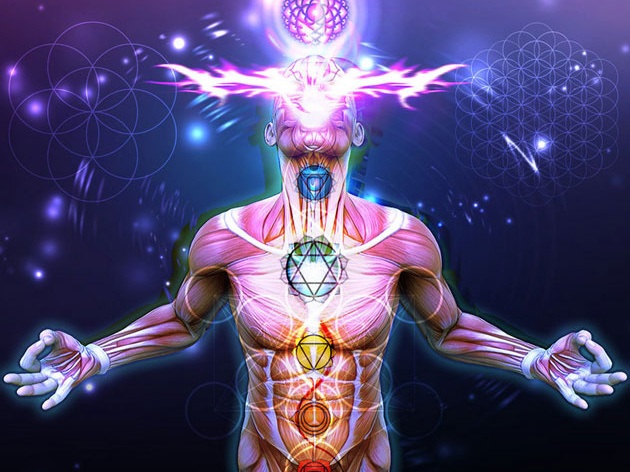
The universe has been evolving for nearly 14 billion years without consulting our preferences. Stars have formed and collapsed. Galaxies have merged. The heavy elements in your body were forged in ancient supernova explosions long before Earth existed. The iron in your blood was born in a dying star. You are not separate from the cosmos. You are a temporary configuration of it.
When we try to control every detail of our lives, we are pushing against processes far larger and older than ourselves. Trusting the universe does not mean abandoning responsibility. It means recognizing proportion. The laws of physics that govern distant galaxies also govern the atoms in your body. Gravity behaves the same way everywhere we can measure it. The fundamental constants of nature fall within narrow ranges that allow matter, chemistry, and life to exist at all.
There is order beneath the apparent chaos.

Even probability tells a humbling story. The odds of your exact genetic combination existing are astronomically small. Each generation multiplies possibilities beyond comprehension. Out of immense combinatorial complexity, you emerged. Not as the center of existence, but as one expression among countless potential expressions.
Cosmic irrelevance, understood this way, becomes a kind of medicine. It dissolves the illusion that everything hinges on your constant vigilance. It softens the belief that a single mistake will unravel the fabric of reality. The cosmos is not so fragile.
At the same time, irrelevance on a universal scale does not cancel meaning on a human scale. We have yet to confirm life beyond Earth. Despite scanning the skies for decades, we have found no definitive evidence of another civilization. In a universe this vast, conscious awareness may be extraordinarily rare. If that is true, then your awareness is not trivial. It is precious precisely because it is fleeting and local.
You are small in the grand architecture of the cosmos. Your life is brief against the backdrop of billions of years. You are not steering the expansion of the universe or orchestrating the birth of stars.
And yet, against staggering odds, you are here. A self aware arrangement of stardust, capable of love, curiosity, and reflection.
Cosmic irrelevance is not a verdict of worthlessness. It is an invitation to relax your grip on the details. The universe does not depend on your perfection. It never has. Trusting that fact may be one of the most rational, and freeing, conclusions we can draw from the stars.